The Hidden Data Errors Delay Healthcare for Millions of Americans
Network inaccuracy isn’t an inconvenience – it’s a public health crisis.
Interoperability offers the potential to improve the quality of care by providing more comprehensive, accurate health information to doctors and other providers, to patients and their caregivers, as well as to healthcare payers, and others with a valid need.
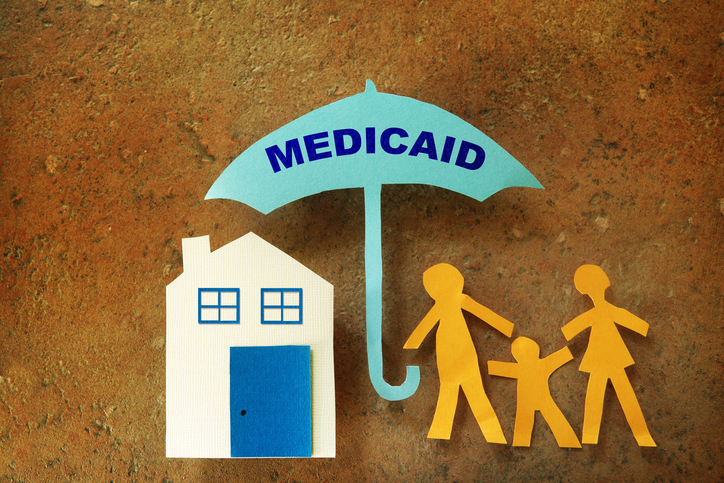
At the heart of this fight are the patients whose lives quite literally depend on Medicaid. But we are also fighting for the caregivers who show up every day, the children who rely on stability, the families who rally around their loved ones, and all those whose lives are shaped by access to care.
We can’t ignore what AI makes possible: faster diagnoses, smarter workflows, better use of limited resources, and more personalized care at scale. If we get this right, we can build a system that works better for everyone, not just the few who can afford concierge care or live near major medical centers.
The combination of coverage awareness and care navigation powered by agentic AI has the potential to transform how older adults engage with the healthcare system.
Our mental health system is not designed to treat people in crisis. Instead of being administered right away and effectively, it shoves patients through a maze of barriers. If we are serious about saving lives, then we must reconsider how mental health care is administered.
In a landscape where complexity has long been the norm, the power of one lies not just in unification, but in intelligence and automation.
We cannot simply accept this status quo and leave an entire generation of children unsupported when more viable options are available.
While the drop in drug overdose deaths is promising, and could potentially be partially attributed to the efforts of the federal government, we must remain cognizant about the sheer number of lives we continue to lose every year to overdose.
At a moment when medication therapy for sickle cell disease (SCD) leaves too many behind and widespread access to curative gene therapies still lies in the distant future, automated red blood cell exchange is experiencing renewed interest. To improve patients’ lives, a broad commitment is needed to expand access to transfusion therapies.
Create Health Ventures announced the close of its inaugural $21 million fund, which is focused on technology for payers. This is because payers are “the lynchpin” for the types of change that the fund wants to see, such as better care access and improved population health outcomes, Managing Partner Amit Aysola said.
Providence is investing $712 million into new facilities in Orange County, California. The health system is adding a new medical center in both San Clemente and Rancho Mission Viejo , as well as a new patient tower for Providence Mission Hospital.
In addition to ensuring patients have access to treatment, biopharma companies need to manage new patient requests to enter clinical trials, who will need assistance navigating enrolment and reimbursement.
The Daring Circle - part of the Women's Forum for the Economy and Society - is hoping to use technology to tackle the issue of women's access to healthcare.
The Atlanta startup provides various tools to improve patient access, including patient matching, relationship management and check-in solutions.
In December 2016 and January 2017, Reach Health surveyed 436 healthcare experts to uncover their telemedicine program objectives as well as the challenges they face.